
What Practical IT Infrastructure Management Looks Like in 2026
Practical infrastructure management in 2026 means understanding the estate, setting standards, managing cost and capacity, observing system behavior, protecting access, and maintaining continuity as AI workloads become part of everyday operations.
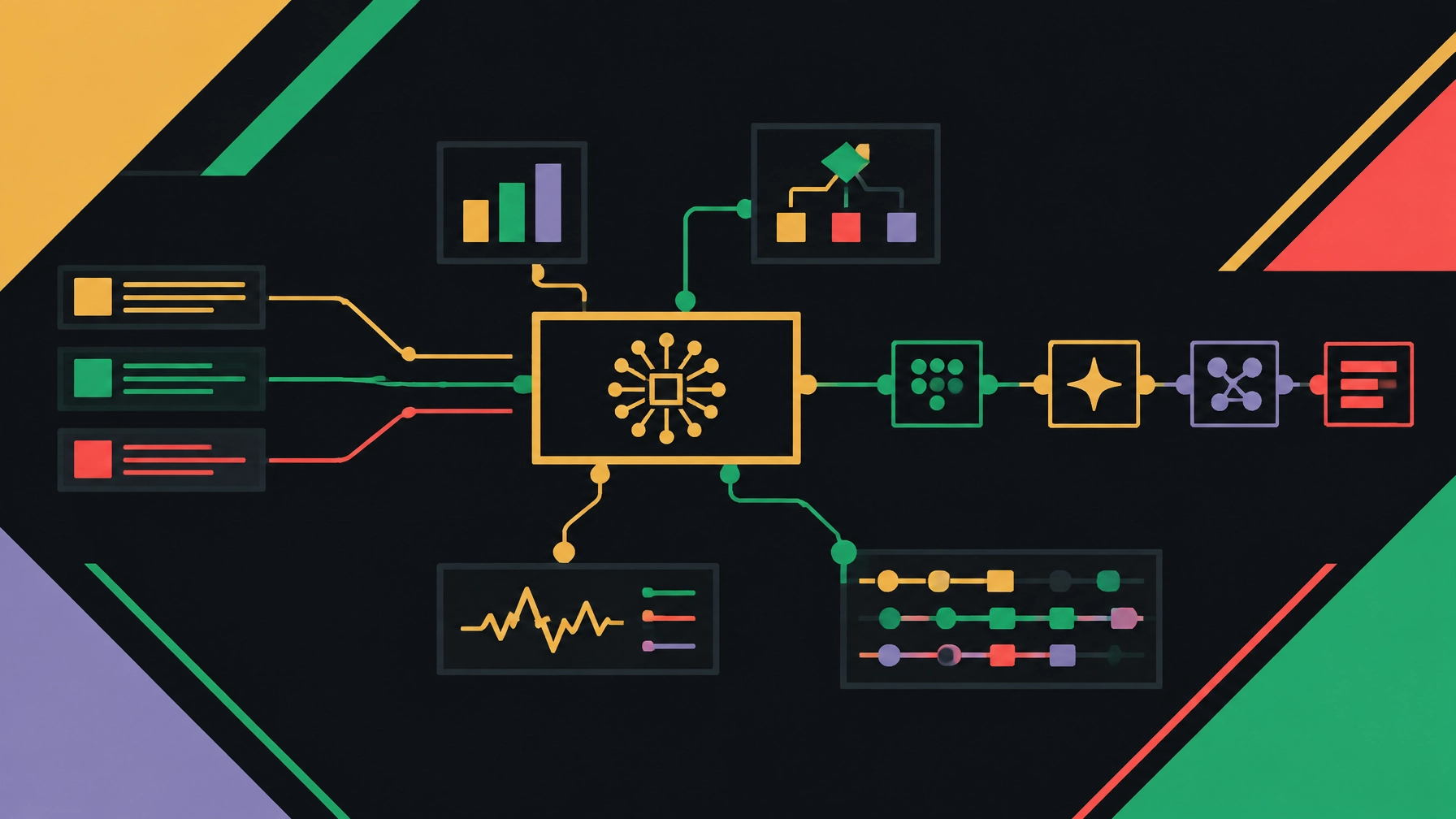
Cloud infrastructure is no longer limited to business applications, databases, and conventional workloads. AI services now run beside core systems, drawing on the same networks, identity layers, storage estates, operational teams, and budgets.
That changes the work.
Practical IT infrastructure management in 2026 is not only about keeping servers available or selecting a cloud platform. It is about understanding the estate, establishing standards, managing cost and capacity, observing how systems behave, protecting access, and maintaining continuity when conditions change.
AI adds another layer of operating pressure. Model training, inference, vector databases, data pipelines, and AI-enabled applications can create uneven demand across compute, storage, and network resources. They also introduce new questions around data location, workload placement, access control, and operational accountability.
The infrastructure must support ambition without losing discipline.
Built with intent.
AI changes the shared estate
When AI workloads sit on the same estate as core business systems, infrastructure teams manage a more varied operating environment.
Traditional applications often have recognizable demand patterns. AI workloads can be more elastic and resource-intensive. Training may require concentrated accelerator capacity. Inference may need consistent low-latency access. Data processing can increase storage and network usage. A production AI feature may also depend on APIs, model providers, retrieval systems, and new monitoring signals.
These dependencies create practical management requirements:
- Placement: Which workloads belong in public cloud, private infrastructure, colocation, or a hybrid arrangement?
- Capacity: How should CPU, memory, storage, network, and accelerator demand be forecast?
- Access: Which people, services, and AI agents can reach sensitive systems and data?
- Continuity: What happens when a provider, model endpoint, region, or internal service is unavailable?
- Cost: Which teams, applications, and features are responsible for infrastructure and AI consumption?
A cloud AI infrastructure strategy must answer these questions before the estate becomes difficult to govern.
This does not mean every organization needs to build a large AI platform. It means every organization needs a clear operating position on how AI workloads fit into the systems it already depends on.
Managed infrastructure starts with assessment
Tooling cannot compensate for an unclear environment.
An infrastructure assessment establishes what exists, how it connects, what it costs, and where the material risks sit. That includes applications, servers, virtual machines, cloud accounts, identity systems, networks, storage, observability platforms, backup arrangements, and third-party dependencies.
For AI workloads, the assessment extends to model providers, data pipelines, vector stores, inference services, accelerator requirements, and usage patterns.
The output should be practical. It should provide:
- A current inventory of infrastructure and services.
- A dependency map showing how systems rely on one another.
- A view of cost, capacity, performance, and operational risk.
- Security and access gaps that require attention.
- A sequenced roadmap for remediation, migration, or modernization.
This is the starting point for Onyx Cloud & AI. The division works across assessment, cloud foundations, migration, observability, managed services, and optimization. Each stage can be scoped independently, but the work is designed to connect from one operating phase to the next.
Understand the estate first.
Five building blocks of practical management
1. Inventory and assessment create a working baseline
The first building block is a current record.
A useful inventory is not a static spreadsheet prepared for a compliance exercise. It is a working baseline that supports decisions. It should identify ownership, business importance, technical dependencies, data sensitivity, lifecycle status, and expected recovery requirements.
The baseline should also distinguish between what is known and what remains uncertain. Unknown dependencies are operational risks. Unused resources are cost risks. Unsupported systems are continuity risks.
Assessment turns infrastructure from an assumption into a managed system.
2. Network and compute foundations establish control
Cloud environments need structure before workloads move into them.
That structure includes account or subscription boundaries, identity integration, network segmentation, connectivity, logging, backup, recovery, and defined administrative paths. It also includes decisions about how compute is provisioned and changed.
Infrastructure as code helps make those changes repeatable and reviewable. Standard patterns reduce the chance that every workload becomes a one-off implementation. For AI workloads, the same foundation must account for accelerator access, data movement, storage performance, and the separation of development, testing, and production environments.
A platform should be governed, not merely provisioned.
3. Cost and capacity discipline keep growth usable
Cloud cost management cannot remain a monthly reporting exercise. AI makes this more important.
A model endpoint, data pipeline, GPU instance, or storage layer can become a meaningful cost driver before its value is clearly understood. Practical management connects consumption to an application, team, project, or business outcome. It also sets thresholds for review.
This means:
- Applying consistent tags and ownership records.
- Reviewing idle and underused resources.
- Forecasting capacity against actual demand.
- Comparing cloud, colocation, and owned infrastructure where appropriate.
- Monitoring the cost of AI features alongside their usage and performance.
FinOps is most useful when it sits within daily operations. Cost, performance, and reliability should be reviewed together because optimizing one in isolation can damage another.
Capacity is not simply a technical question. It is an operating decision.
4. Telemetry and incident handling turn signals into action
A system monitoring tool can show that a service is unavailable or that a resource has crossed a threshold. That is useful, but it is not the full operating picture.
Observability connects logs, metrics, traces, events, changes, and service relationships so teams can understand why a system is behaving a certain way. For AI workloads, this may include inference latency, token usage, model error rates, data pipeline health, provider response time, and cost per request.
An AI observability tool should not be treated as a replacement for operational judgment. Its value comes from helping teams correlate evidence, reduce alert noise, investigate incidents, and identify patterns across infrastructure and applications.
The practical model is controlled and measurable:
- Define the service and its operating objectives.
- Collect the signals needed to understand its behavior.
- Route alerts to the right owners.
- Document response steps and escalation paths.
- Review incidents and improve the system.
Onyx Cloud & AI works with existing observability platforms where they are fit for purpose. It can also implement OpenTelemetry practices, dashboards, alerting, service-level objectives, and managed observability. Onyx Insights is part of the wider group portfolio, but a managed-service relationship does not require a specific platform.
Visibility should support decisions.
5. Security and access must follow the workload
AI infrastructure introduces new access paths. Applications may call external model providers. Engineers may access sensitive datasets. Automated agents may propose or perform operational actions. These activities require clear boundaries.
Practical security includes identity-based access, network segmentation, encryption, secrets management, audit records, and regular review of permissions. It also requires a defined position on automated changes.
Low-risk actions may be automated when they are documented, reversible, and subject to appropriate approval. Production changes need stronger controls, including role-based access, review gates, rollback options, and a record of what happened.
Security is not a separate layer added after delivery. It is part of how the estate is designed and operated.
Continuity is part of the service
Managed infrastructure has to account for the day after implementation.
That means maintaining backups, testing recovery, coordinating patches, reviewing configuration drift, monitoring capacity, and supporting incident investigation. It also means documenting responsibilities clearly. The customer should know what the managed service covers, what remains internal, how requests are handled, and how performance is reported.
Continuity depends on more than backup software. It depends on known recovery objectives, tested procedures, current records, and people who understand the environment.
The Onyx Cloud & AI service model covers administration, backup and recovery oversight, maintenance coordination, cost and performance management, operational reporting, and architecture reviews. The scope, support coverage, response targets, and responsibilities are defined for each engagement.
A system is not resilient because it has a recovery document. It is resilient when recovery has been designed, tested, and maintained.
Shared capability makes the work durable
Onyx Cloud & AI operates within a wider group that brings together technology, engineering, operations, finance, commercial, and support capability.
That shared structure matters because infrastructure decisions rarely remain technical decisions. A migration may affect contracts, procurement, risk, customer support, reporting, and future product development. A cost review may require finance and engineering to work from the same records. A continuity plan may need operational owners beyond the infrastructure team.
The group model combines independent focus with shared standards. It gives each business room to operate while providing common support where consistency matters.
This is how managed infrastructure becomes durable. Not through one tool. Through connected capability.
Onyx Technologies Group describes this as practical ambition supported by operating discipline, local understanding, and enduring trust. The principle applies directly to cloud and AI infrastructure. Strong architecture needs strong operating context.
Where cloud and AI infrastructure are heading
Cloud and AI infrastructure will continue to converge.
The next stage will involve more workloads that combine conventional applications, data platforms, automation, and AI services. Infrastructure teams will need a connected view of system health, cost, capacity, security, and business importance.
The direction is visible in current infrastructure research, including Google Cloud’s discussion of infrastructure in the agentic AI era. The practical implication is not that every operation becomes autonomous. It is that infrastructure management must become more contextual.
AI can help summarize telemetry, identify cost anomalies, correlate events, and guide routine response steps. People still define the standards, approve material changes, and remain accountable for the operating outcome.
The future is not tooling without oversight. It is better-connected systems and better-informed decisions.
Start with the estate you have
A useful infrastructure conversation begins with evidence.
What runs today? Which services matter most? Where are the dependencies? What does the environment cost? What happens during an outage? Which workloads are ready for cloud or AI support, and which need a different path?
An infrastructure assessment creates the working baseline for those decisions. From there, organizations can plan cloud foundations, migration waves, observability improvements, security controls, and ongoing managed operations in the right sequence.
Onyx Cloud & AI supports cloud assessments and managed infrastructure conversations for organizations that need a clearer view of their estate and a practical route forward. You can also contact Onyx to discuss an infrastructure, observability, migration, or AI operations requirement.
Assess clearly. Operate deliberately. Build what lasts.